|
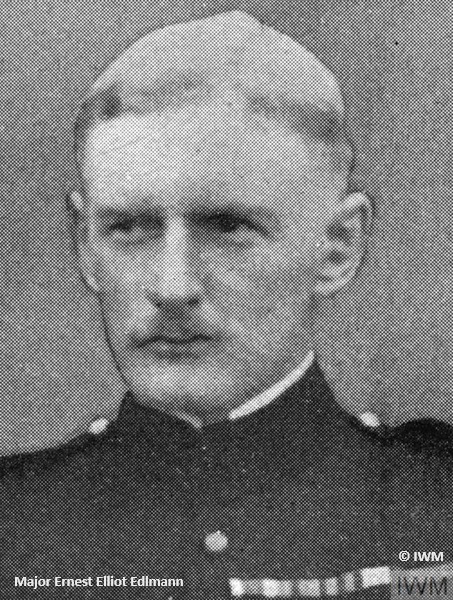
Major Edlmann died of wounds on 17 Apr 1915 in Basra having been wounded on 14th during the Battle of Shaiba (Barjisijah). Unfortunately the Battery War Diary does not contain any pages for the period March to November 1915. The following general description of the events of the 14th are courtesy of Roads to the Great War website.
The British garrison at Shaiba consisted of about 7,000 men in a fortified camp including a trench and barbed wire. At 5 a.m on the 12th, the Ottoman troops started with a bombardment. That evening starting at dusk they tried to crawl through gaps in the British barbed wire, but were repulsed. By morning of the 13th the Ottoman troops had withdrawn to their positions at Barjisiyeh Wood.
Later the next day it was apparent that some Ottomans and Arab irregulars were trying to slip around Shaiba, and maybe get to Basra by bypassing the town. The British, under General Melliss, sent the 7th Hariana Lancers and later the 104th Wellesley's Rifles to attack the Arabs, but those attacks were failures. Mellis then attacked with the 2nd Dorsets and the 24th Punjabis, backed by artillery fire, and they routed the Arab irregulars, capturing 400 and dispersing the rest. The Arab irregular forces would not take part in the rest of the battle.
Ottoman Commander Sulaimann Askeri had his regular troops fall back on Barjisiyeh Wood. On 14 April the British left Shaiba to look for the remaining Ottoman forces. They found them at Barjisiyeh Wood. Fighting started at about 10:30 a.m. and lasted until 5 p.m. Mellis had to adjust his forces on the battlefield under fire to bring them to bear on the Ottoman positions. Ottoman fire was intense, and by 4 p.m., the British attack had bogged down. Men were thirsty and running low on ammunition, and the Ottoman regular troops showed no indication they were going to give up. The Dorsets then launched a bayonet charge on the Ottoman lines that caused the rest of the Indian troops to follow, and the Ottomans were overwhelmed. They retreated from the battlefield.
The British, worn out from the day's fighting with little transportation and with their cavalry tied down elsewhere, did not pursue. Sulaimann Askeri would end up committing suicide over the loss, which he blamed on the Arab irregulars and their failure to support him. On the British side the battle was described as a "soldier's battle" meaning a hard fought infantry fight, where they, especially the British troops, decided the day. British and Indian killed and wounded totaled about 1,200 and the attacking forces lost almost double that number.
It was the last time the Ottomans would threaten Basra. After the battle it would be the British who generally held the initiative in Mesopotamia. It also changed Arab attitudes. They began to distance themselves from the Ottomans, and later revolts broke out in other parts of the empire.
|