South Warwickshire Family History Society War Memorial Transcription Project |
|
|


|
Military History |
| Theatre of War | Medals | Commonwealth War Grave or Memorial |
|---|---|---|
| France and Flanders | 1914-15 Star, British War & Victory Medals | Thiepval Memorial |
| Arrived in Theatre | Medal Citation (if app) | SWFHS Area Memorials |
| 19 Jul 1915 in France | Alcester War Memorial Cross | British Legion | |
| Action, Battle or Other Reason Killed | Date and Place Enlisted | Other War Memorials |
| Battle of the Somme | September 1914 in Worcester | |
| Place of Death | Previous Regiments or Units | |
| La Boisselle | ||
Circumstances Leading to Death (Normally from War Diary)
|
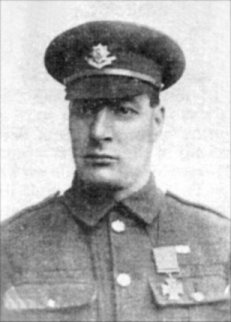
Thomas is listed as being killed in action on 3 July 1916 during the Battle of the Somme. On that day they took part in the Storming and capture of the village of La Boisselle during which one of Thomas's namesakes and colleagues, Thomas Turrel won the VC. The following is taken from the excellent Worcestershire Regiment website and we are grateful to be able to reproduce it. This website is one of the better ones out there and is full of useful information about the Regiment. The Storming of La BoisselleTHE STORMING OF LA BOISSELLE The III Army Corps, in the centre of the British battle line, had been entrusted with the capture of the fortresses of Ovillers and Pozieres. On July 1st the attack of the IIIrd Corps had been partially successful. The 8th Division had failed before Ovillers; on the other hand the 34th Division had bitten deeply into the German positions south of La Boisselle, though that fortified village, despite the explosion of an enormous mine, still defied all assaults. By dawn of July 2nd La Boisselle formed a sharp salient in the enemy's line. A fresh attack was ordered, and the 19th Division were brought forward from Corps Reserve. The 10th Worcestershire, after spending the night before the battle in trenches west of Albert had been moved forward about 9 a.m. on July 1st to assembly positions nearer the line. There the Battalion lay all day amid terrific thunder of gun-fire and conflicting rumours and alarms. After dark (7.40 p.m. according to the Brigade. 9.15 p.m. according to Battalion) orders came for the 10th Worcestershire and 8th North Staffordshire to move up to the front line for attack. The Battalion moved off. "In the communication trench confusion reigned. Wounded were being brought out—we were trying to get in—carrying parties were trying to go both ways—it was raining and the trench was knee-deep in mud." Not until long after midnight did three companies reach the British front line opposite La Boisselle, and then it was too late for the attack to be carried out. The plan was cancelled, and the three companies made their way back to reserve trenches on the Usna—Tara ridge. By dawn all platoons had been collected in trenches and dugouts. Officers and men alike were utterly exhausted. "The remainder of the day (July 2nd) was spent in sleep—which was greatly interrupted by the bombardment of La Boisselle" (Battalion Diary). That afternoon the 58th Brigade attacked the La Boisselle salient, securing a lodgment on the southern face; and orders were sent for the 57th Brigade to move up after midnight. Rather than risk another jam in the communication trenches, the 10th Worcestershire moved forward across the open in three lines of platoons, reached the British front line opposite the extreme western end of the hostile salient, and lay down to await the moment of attack. The other battalions of the Brigade formed up to flank and rear. Flares and bursting shells disclosed their position to the enemy, and a heavy fire of shrapnel caused many casualties: but all lay still, awaiting the hour fixed for the attack. Shortly after 3 a.m. (2 a.m. according to the Battalion Diary. 3.15 according to the Brigade) amid the blazing gun-fire all around, a warning order was passed along the line. A few minutes later a second order, unheard amidst the din but quickly sensed, rippled down the ranks. The men rose to their feet, and the order was given to advance. The platoons rushed forward, crossed "No Man's Land" and charged the German defences. A fierce fight followed with bomb and bayonet over successive lines of trenches. The companies became confused, control became impossible and the platoons stormed forward as best they could, led by their subalterns and N.C.O's. One party was led by Lance-Corporal A. J. Gardner, who dashed ahead of the rest carrying a Lewis-gun under his arm which he fired as he ran. A party of the enemy gave way before him and he seized their trench. He was hit, but continued to fire his Lewis-gun till he fainted from loss of blood. L/Cpl. Gardner was awarded the D.C.M. In small groups the Worcestershire platoons fought their way onwards into the ruins of the village. Ten days of intense bombardment had shattered every house; but the enemy had previously constructed deep dugouts and had strengthened the cellars. In those underground strongholds they had survived the bombardment, and now they swarmed up from their cover to meet the attack. In and around the smashed heaps of masonry which had once been houses, the British platoons fought with enemies who appeared suddenly and unexpectedly from every side. Only by the momentary light of flares and shell-bursts was it possible to distinguish friend from foe. The fighting was hand-to-hand or at point-blank range, with bomb, bullet or cold steel.
The first light of dawn enabled the fighters in the village to recognise each other with certainty, and the struggle reached its climax. Most of the defenders had by that time been killed or captured, although a few strong points still held out. Several of the Worcestershire platoons had fought their way right through the village to the more open ground on the far side. That ground was a tangle of broken hedges in a wilderness of shell-holes. Small parties of troops pushed forward in the excitement of victory, shooting, bombing and collecting prisoners.
Private Thomas George Turrall V.C.
Throughout that day he tended and defended the helpless subaltern. When darkness came he cautiously made his way towards the village, with the officer on his back. By good fortune they reached safety. Private Turrall afterwards stated that his worst moment in the day was when he reached the British line and was hailed in the darkness with "Hands up !" followed by "That man behind you too—quick !" The subaltern was unconscious. He was taller than the private and his feet reached the ground, though his arms were round Private Turrall's neck; but fortunately the position was explained before a shot was fired. Lieutenant Jennings' wounds proved mortal, and he died within a few hours; but not before he had dictated an account of his soldier's deed; and Private Turrall's brave devotion was rewarded by the Victoria Cross. |
| Personal & Family History |
| Birth Date/Place | Baptism Date/Place |
|---|---|
| Jan Qtr 1889 at Bromsgrove | |
| Parents Names | Abode |
| John and Millicent Hancock | 23 Henley Street, Alcester |
| Schools | Colleges |
| ~ | |
| Address History | Employment History |
| 1891 - New Street, Cow Honeybourne | 1901 - Teamster on Farm in Church Honeybourne |
| 1901 - Arrow Farm, Arrow. Alcester (servant) | |
| 1911 - Not found | |
| 1916 - 23 Henley Street, Alcester |