
South Warwickshire Family History Society War Memorial Transcription Project
The Fallen Men of South Warwickshire - World War One |
|
|

|
Military History |
| Theatre of War in Which Died | Campaign Medals | Commonwealth War Grave or Memorial |
|---|---|---|
| France & Flanders | 1914-15 Star, British War & Victory Medals | Arras Memorial |
| First Arrived in Theatre | Bravery & Conduct Medals | SWFHS Area Memorials |
| March 1915 in France | Distinguished Service Order | Leamington Spa War Memorial |
| Action, Battle or Other Reason Died | Date and Place Commissioned | |
| German Spring Offensive | 12 Aug 1899 at Sandhurst | Other War Memorials |
| Tonbridge School War Memorial | ||
| Place of Death | Previous Regiments or Units | Sandhurst Memorial Chapel |
| near St. Leger | 39th Garhwal Rifles | |
| York and Lancaster Regiment |
Military Service History
- Dec 1897 - Officer Cadet at Sandhurst Military College
- 12 Aug 1899 - Commissioned as 2nd Lt in 1st Bn, East Surrey Regiment (Gazette)
- 01 Jan 1901 - Promoted to Lieutenant and joined the Indian Army in June 1901 (Gazette)
- 29 Jul 1908 - Promoted to Captain and left the Indian Army in Mar 1909 (Gazette)
- 16 Mar 1909 - Gazetted as Captain to the York & Lancaster Regiment
- 1911 - Appointed Adjutant to 3rd Special Reserve Bn at Pontefract and was still there at the outbreak of WW1 (Gazette)
- 1915 - Posted to France as an Observer in the RFC then posted back to York and Lancs Regiment in Ypres
- 23 Apr 1915 - Severely wounded at Ypres
- 01 Sep 1915 - Promoted to Major and posted to 12th Battalion Suffolk Regiment as 2nd in Command (Gazette)
- 15 Aug 1916 - Promoted to Lt. Colonel (Gazette)
- 13 Nov 1916 - Mentioned in Despatches by Sir Douglas Haig
- 01 Jan 1917 - Awarded the Distinguished Conduct Medal (Gazette)
Circumstances of Death
|
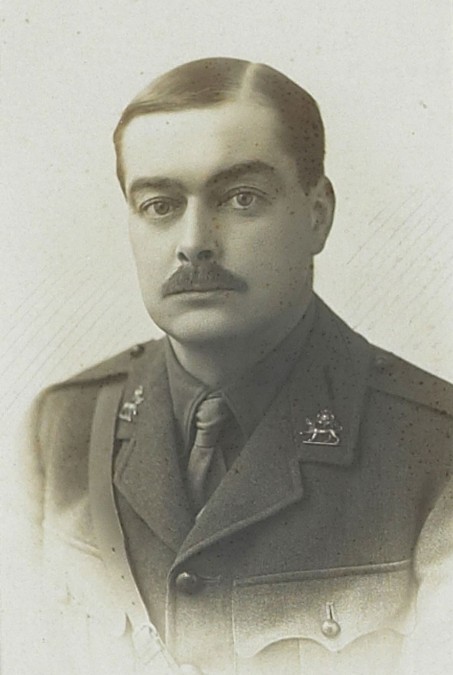
Theodore was killed in action on 22nd March 1918 whilst leading his battalion against the massive German attacks that formed their Spring Offensive. The following description of events for that day is taken from his Tonbridge School obituary (Click here to read in full) "None will forget the stand of the Third Army in the great battle which began on March 21st 1918, and Sir Douglas Haig's special reference to the 40th Division is on record. The Suffolks were in the thick of the fighting. They lost their Colonel early on the 22nd, but were not put out of action for eight days, and avenged his death (so writes one of the few surviving combatant officers) a thousand times. On the night of March 21st-22nd, the Division was holding the line near St. Leger, and the position was somewhat obscure after the heavy fighting of the previous day. Colonel Eardley-Wilmot left Battalion H.Q. at Morthomme about 6 a.m. on March 22nd to go round the front line, and since the Battalion had been unable during the night to get into touch with the 13th Yorkshires on its left, decided to clear the situation up himself. With this object, he went forward from the front line, bearing to the left, taking an officer, a corporal and three men with him, and giving orders for a Platoon to follow him. There was a heavy mist at the time, and he evidently walked directly on to a party of the enemy who had crept up under cover of darkness. This party opened fire with a machine gun. The other officer was killed at once, the Colonel fell immediately afterwards, and two of the men were wounded. The Corporal and the remaining man dragged the Colonel back to a shallow trench, remaining with him several minutes, and only leaving him to warn the Platoon Commander of the presence and position of the enemy. The enemy advanced, and it was impossible to bring the Colonel back, though several attempts were made and considerable casualties incurred thereby. The Corporal had no doubt that the Colonel was killed, as he was hit in the chest, and never spoke or moved afterwards. With this characteristic act of devotion to duty ended the career of a born soldier. His whole heart was in his profession, and he possessed in a high degree the qualities of courage, coolness and confidence, together with the determination and power of quick decision essential in meeting sudden emergencies. He had been recommended for the command of a brigade, and, had he lived, was doubtless destined to rise high. He had no illusions. He hoped, but hardly expected, to return, and was content to die in a great cause". |
| Personal & Family History |
| Birth Date/Place | Baptism Date/Place |
|---|---|
| 15 Dec 1879 at Petworth, Sussex | 16 Jan 1890 at Petworth St. Mary's |
| Parents Names | Abode |
| Robert and Frances Gwynne Eardley-Wilmot | Hamilton House, Leamington Spa |
| Wife and Marriage Details | Children |
| Mildred Claire Eardley-Wilcox nee Reynolds | Anthony Revell born 1910 and killed in 1944 |
| 29 Jul 1908 at St. Peter's Church, Leamington Spa | |
| Schools | Colleges |
| Tonbridge School 1891-97 | Sandhurst Military College 1897-1899 |
| Address History | Employment History |
| 1879 - Preyste House, Petworth, Sussex | 1891 - Student at Tonbridge |
| 1881 - East Street, Petworth, Sussex | 1901 - 2nd Lt in Army |
| 1891 - 8 Euston Place, Leamington Spa (Apr) | 1911 - Captain in Army |
| 1891 - Tonbridge School, Tonbridge, Kent (boarder) | 1914 - Captain in Army |
| 1897 - Sandhurst Military College, Berks | |
| 1901 - Army Barracks, India | |
| 1911 - Army Barracks, Pontefract. Yorks | |
| 1918 - Woodland Grange, Leamington Spa |
