
South Warwickshire Family History Society War Memorial Transcription Project
The Fallen Men of South Warwickshire - World War One |
|
|

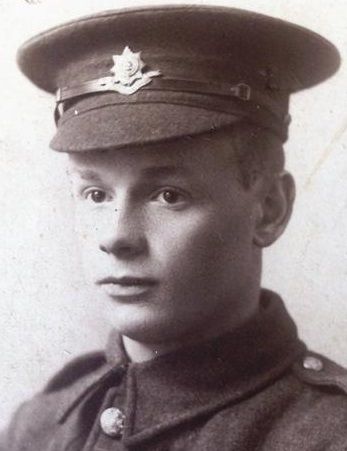
|
Military History |
| Theatre of War in Which Died | Campaign Medals | Commonwealth War Grave or Memorial |
|---|---|---|
| France & Flanders | 1914-15 Star, British War & Victory Medals | Thiepval Memorial |
| First Arrived in Theatre | Bravery & Conduct Medals | SWFHS Area Memorials |
| 19 Jul 1915 in Boulogne, France | ~ | Shustoke War Memorial |
| Action, Battle or Other Reason Died | Date and Place Enlisted | Other War Memorials |
| Battle of the Somme | August 1914 in Birmingham | ~ |
| Place of Death | Previous Regiments or Units | |
| Fricourt, Somme | ~ | |
Circumstances of Death
|
Robert is listed as being killed in action on 22rd July 1916. The following description of events involving the 10th Battalion for the period 20th to 24th July 1916 is taken from the book The Worcestershire Regiment in the Great War by Capt. Henry FitzMaurice Stacke and is available on the Internet Archive here. "The 10th Worcestershire had moved forward that evening [20th July 1916] from their assembly position west of Fricourt and had made their way into the position at Bazentin through the midst of the general confusion of that wild night. Throughout the following day (July 21st) the two Battalions [2nd & 10th] lay side by side in their half-moon position at Bazentin, shelled intermittently and working hard to improve the trenches. The Windmill was shattered by shellfire and the 10th Battalion lost some fifteen men. In order to secure their regained position in High Wood, the enemy had pushed forward an advanced post along the Upper Road to an intermediate spur, halfway to the Worcestershire line, and a well-handled machine-gun ensconced at that point caused much discomfort to the Battalions. A gallant attempt was made during the afternoon to capture that machine-gun. A party of bombers of the luth Battalion, supported by a Lewis-Gun section, crept forward down the toad; but the movement was discovered and bombers and Lewis-gunners alike were wiped out by the enemy's fire; none came back. A second attack was made after dark but was driven back by heavy fire. Patrols went out and found the enemy engaged in establishing a new forward trench on the reverse slope of the Intermediate Spur. The night of July 2Ist/22nd proved very trying for the 10th Worcestershire. Reliefs on tight and left entailed several shifts and contractions in the Battalion line. Another attack on the 10TH unconquered machine-gun was organised at 1am four platoons worked their way down the Upper Road two platoons of C Company north of the road and two platoons of B Company south of it. In the darkness the listeners in rear strained their ears and heard, amid intermittent shellfire, a sudden outburst of machine-guns and musketry. Presently some survivors of the B Company platoons came back to the trenches. The attack had failed under a withering fire; what had happened to the two platoons of C Company was a mystery not cleared up until two days later, when the sergeant who had led one of the platoons made his way back. The enemy machine-gun, it appeared had been pushed forward in the darkness to a bend in the road on the forward slope of the hill. In that new position the machine-gun post had surprised the attacking platoons, all of whom had been killed or captured. The sergeant himself, with one companion had found shelter in an abandoned dugout during the ensuing forty-eight hours. When firing died down the two survivors made their way back. Furious at the defeat, the Battalion arranged yet another attack. Artillery support was requested and a set piece attack was organised. All arrangements were made, but communication broke down and orders for the attack did not arrive. Mistaking their orders, D Company of the 10th Worcestershire advanced unsupported, only to be driven back by a storm of fire. That evening orders were received that the Battalion and the 8th Gloucestershire would attack a trench which the enemy had newly dug from the machine-gun position on the intermediate spur to the northward to link up with the Switch-Line. Preparations were in progress when counter-orders came that the 10th Royal Warwickshire would replace the 10th Worcestershire for the attack. That change was made at the last minute and inevitably caused confusion, the Royal Warwickshire were unable to arrive in time, and the attack, made disjointedly, failed with heavy loss. The platoons of the 10th Worcestershire made their way back through heavy shellfire to a position in reserve in the valley just north of Flatiron Copse. There the Battalion rested throughout July 23rd. The 57th Brigade was now being withdrawn to rest, and after dark the 10th Worcestershire marched back into bivouac in Becourt Wood. The Battalion remained in bivouac during the ensuing week. Two more drafts came to fill up the ranks. Once more those drafts were composed of men from other regiments—Yorkshire and Rifles. More than two-thirds of the fighting strength now consisted of such importations, and the Regimental spirit inevitably suffered. The folly of the authorities at the base was undermining the efficiency of the fighting Battalions". |
| Personal & Family History |
| Birth Date/Place | Baptism Date/Place |
|---|---|
| Oct-Dec Qtr 1894 in Shustoke | 24 Sep 1894 at Shustoke St. Cuthbert |
| Parents Names | Abode |
| Arthur and Jane Allen | Died 1917 and 1916 respectively |
| Next of Kin - Sister | Abode |
| Mary J. Griffiths nee Allen | Great Bangley Farm, Hints, Tamworth |
| Schools | Colleges |
| ~ | |
| Address History | Employment History |
| 1894 - Shustoke | 1901 - School age |
| 1901 - Yew Tree Farm, Shustoke | 1911 - Clerk to Coal Merchant |
| 1911 - Shustoke Green, Shustoke, Warks | 1914 - Shustoke Green Post Office |
| 1914 - Shustoke Post Office, Shustoke, Warks | |
