South Warwickshire Family History Society War Memorial Transcription Project |
|
|


|
Military History |
| Theatre of War in Which Died | Medals | Commonwealth War Grave or Memorial |
|---|---|---|
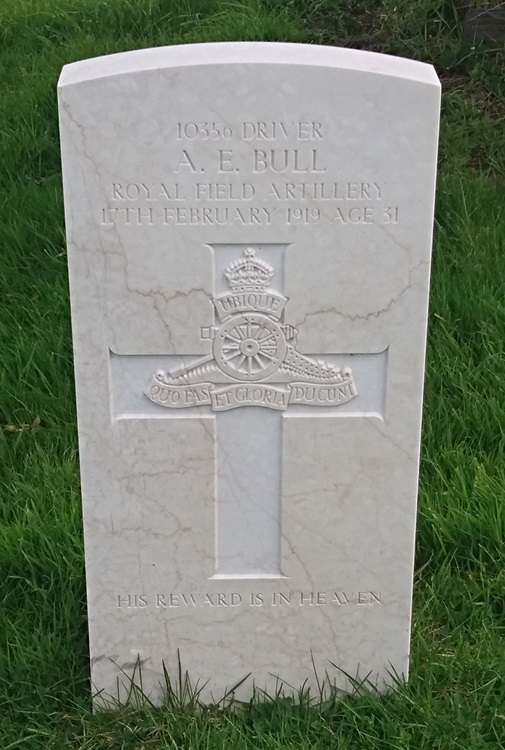
| Home | 1914-15 Star, British War & Victory Medals | Radford Semele (St. Nicholas) Churchyard |
| Arrived in Theatre | Medal Citation (if app) | SWFHS Area Memorials |
| 1 Jul 1915 in Eygpt | ~ | Radford Semele Memorial |
| Action, Battle or Other Reason Died | Date and Place Enlisted | Other War Memorials |
| Died of Lobar Pneumonia | August 1914 in Leamington Spa | ~ |
| Place of Death | Previous Regiments or Units | |
| 1st Southern General Hospital, Stourbridge | ~ | |
Circumstances Leading to Death (Normally from War Diary)
|
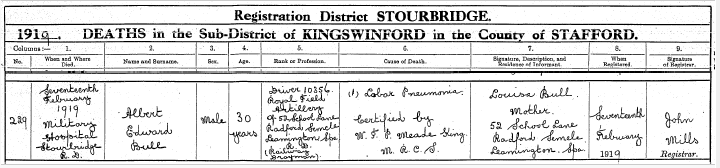
Alberts death certificate reveals that he died of Lobar Pneumonia at the 1st Southern General Hospital, Stourbridge on 17 Sep 1919.
Alan at Great War Forum found a Medical record which informs us that previously Albert had been admitted to the 28th General Hospital (which was based in the Salonika/Balkans Theatre's) on 10 Dec 1916 with jaundice and was released back to duty on 24 Dec 1916. |
| Personal & Family History |
| Birth Date/Place | Baptism Date/Place |
|---|---|
| Apr Qtr 1887 at Chesterton | 15 May 1887 at Chesterton |
| Parents Names | Abode |
| Thomas and Louisa Bull | 52 School Lane, Radford Semele |
| Schools | Colleges |
| Shrubland Street School, Leamington | ~ |
| Address History | Employment History |
| 1887 - Fields Farm Cottages, Chesterton | 1891 - Scholar |
| 1891 - School Lane, Radford Semele | 1901 - Labourer on Market Gardens |
| 1901 - 52 School Lane, Radford Semele | 1911 - Brewery Drayman |
| 1911 - 52 School Lane, Radford Semele | 1914 - Railway Drayman |
| 1919 - 52 School Lane, Radford Semele |